
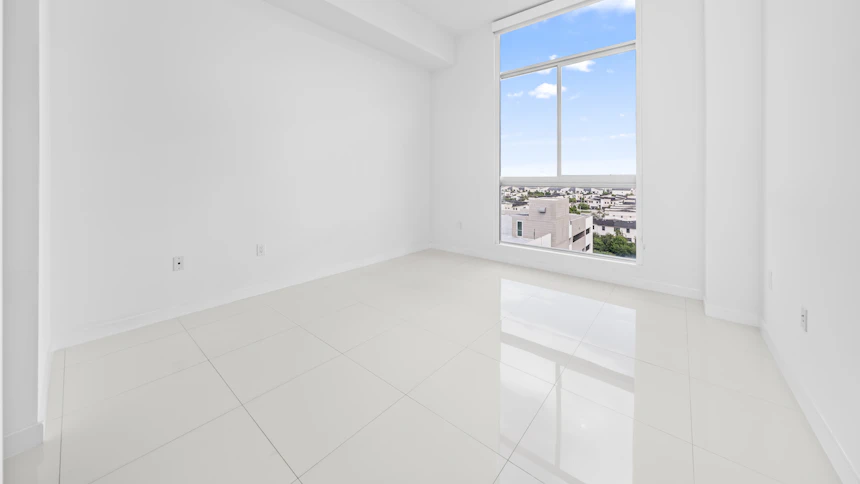
Snagging companies in Dubai
What an inspection costs, what it covers, and why the date on the report matters more than the report.
The short answer
Snagging in Dubai is a pre-handover inspection that lists every defect in a new property so the developer fixes them before you accept the keys. It costs AED 666–999 for a typical apartment. Developers carry a one-year defect liability, so the report is what makes that year usable.
What does snagging cost in Dubai?
Every competitor in this market puts this behind a contact form. Here it is, by unit type, with the source underneath it.
| Property type | Typical price | What is included | Re-inspection |
|---|---|---|---|
| Apartment, studio to 2-bed | AED 666–999 | Full internal inspection and written defect report | |
| Apartment, 3-bed and above | As above, priced on internal area | ||
| Townhouse | Internal plus external envelope and private outdoor areas | ||
| Villa | Internal, external, roof, plant and boundary |
Source: , checked 2026-08-12.The AED 666–999 apartment band is carried from the launch research pack and needs its primary citation restored before publication.
What does a snagging inspection actually cover?
A competent inspection is not a walk-through with a torch. It is a systematic pass through every room and every service — and the defects that cost real money are almost never visible from the doorway.
-
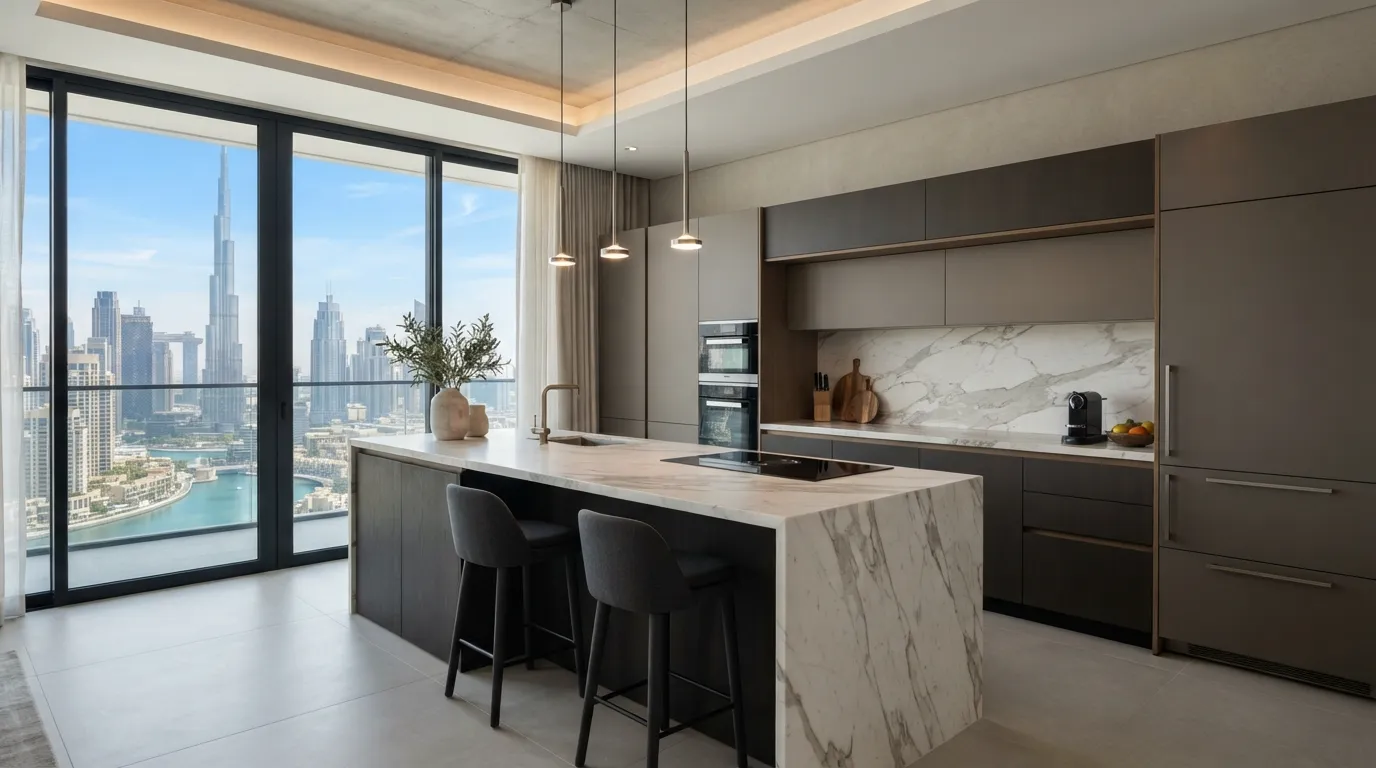
Kitchens and wet areas: cabinet alignment, worktop seal, drainage falls. The most disputed category on any snag list. -
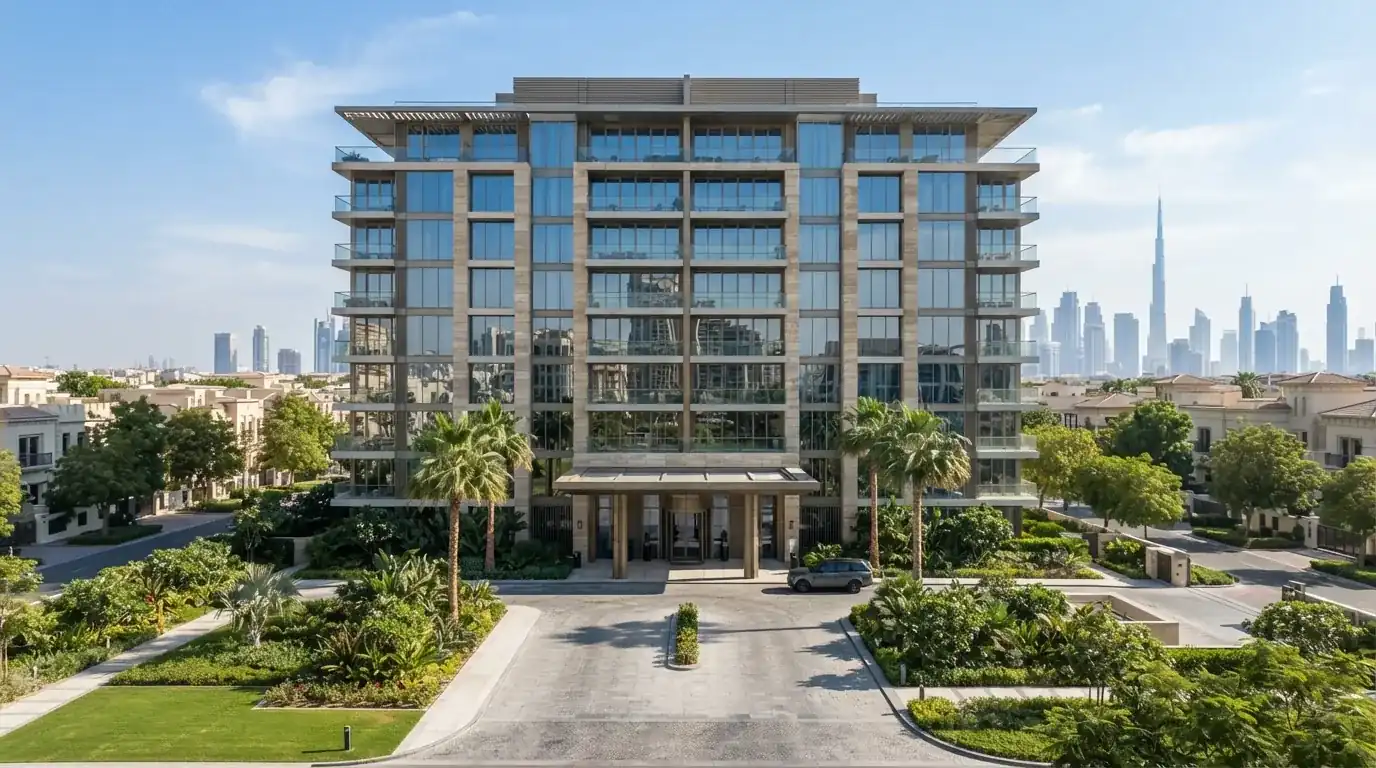
The external envelope, roof and boundary — inspected on villas and townhouses, and absent from an apartment quote. -
Acceptance. Everything above is worth far more before this point than after it.
- Structure and finishes Walls, ceilings, floors and joinery checked for cracking, level, alignment and finish quality, room by room.
- Mechanical, electrical, plumbing Water pressure and temperature at every outlet, drainage falls, socket and circuit testing, air-conditioning output and balance across zones. This is where instruments are needed.
- Waterproofing and wet areas Bathrooms, kitchens, balconies and any roof terrace, tested for pooling and seal failure. The most expensive category to fix after occupation.
- Doors, windows and glazing Operation, sealing, alignment and locking on every opening, including balcony and terrace doors.
- Handover documentation That what was delivered matches what the sale and purchase agreement specified — fittings, finishes and areas.
The output is a written, photographed, itemised report. Itemised matters: a developer responds to a numbered defect list with locations far more reliably than to prose.
What does the law actually say?
The verbatim text of the governing provision goes here, quoted exactly and never paraphrased.
— . Checked 2026-08-12.
The practical effect is well established even while the citation is being confirmed: a developer carries a defect liability period after handover, and a structural liability that runs considerably longer. A snagging report dated before acceptance is the evidence that a defect existed at handover rather than arising from how the property was later used — which is the point the dispute usually turns on.
What do people get wrong about snagging?
Three, in the order they cost the most.
- Treating the report as the finish line The report is not the outcome; the repairs are. An inspection with no re-inspection produces a document proving you knew about defects that were never fixed — worse than useless if it later appears in a dispute.
- Booking it after acceptance Owners book snagging once they have signed the handover acceptance, because that is when the keys arrive. By then the leverage has gone: every defect becomes a request rather than a condition. Book on the handover notice, not on the keys.
- Using the snag list to negotiate price It is not a bargaining chip — the sale and purchase agreement is already signed. It is a list of works the developer is obliged to complete, and treating it as a negotiation invites one you do not need to have.
If the snag list comes back worse than expected and you are reconsidering whether to keep the unit at all, the first number you need is what it is actually worth today.
Questions people ask
Answer first, then the detail. Every figure quoted here is the same figure the page above it publishes, with the same source.
How much does snagging cost in Dubai?
Snagging costs AED 666–999 for a typical apartment. Villas are priced on built-up area and cost more. A re-inspection after the developer has done the remedial work is usually charged separately — see the full price breakdown by unit size.
Is snagging worth it in Dubai?
Snagging is worth it when the cost of the inspection is small against the cost of the defects it finds, which is the normal case on a new handover. The report also creates a dated written record, which matters if the developer later disputes that a defect existed at handover.
When should snagging be done?
Snagging should be done after the developer issues the handover notice and before you sign the acceptance documents. Once you have accepted the unit, defects become harder to push back onto the developer, though the statutory defect liability period still runs.
How long does a snagging inspection take?
A snagging inspection takes for a typical apartment. Larger villas take proportionally longer because every room, every service and the external envelope are checked individually.
What happens after the snagging report?
The report goes to the developer, who carries out the remedial work, and a re-inspection confirms the items were actually fixed. Anything unresolved is escalated under the defect liability period — see how the 12-month window works.
Can I do my own snagging?
You can, and a careful owner with a checklist will find the obvious cosmetic defects. What an owner will not find without instruments are the MEP faults — water pressure, drainage falls, electrical loading, air-conditioning balance — which are the expensive ones. Our room-by-room checklist covers what is checkable by eye.
Where to go next
Ask a question about your own property
No form. Call or email, and the answer comes from the same sourced figures published above.
-
Email
info@plainlyproperty.comThe written report is delivered here within 24 hours of the request.
-
What this is not
No listing, no marketingAsking for a report does not put your property on the market. Plainly Property publishes no listings and holds no licence.